
Salone Internazionale del Mobile — Milano 2025
Founded in 1961, Salone del Mobile was originally created to showcase Italian furniture and design. Over the decades, it has evolved into a celebrated national event; one of the largest and most influential of its kind. For product designers, Salone is what Fall/Winter Fashion Week is to fashion designers: a big deal.
Last year, as the event came and went without me, I promised myself I’d make it there the following spring. Fast forward, and I’ve now returned home with enough inspiration to fuel me until next year (at the least).
It’s incredible how much can be packed into a city as compact as Milan. Just as romantic as you’d expect, I found myself winding through streets that felt like the building blocks of Italy’s identity; and Milan, despite its modern and metropolitan edge, is no exception. The La Dolce Vita spirit is alive and well here, with small charms sprinkled throughout the city. As an American, and especially as a designer, everything feels like a sight to behold. The brick and mortar of a random residential building could easily serve as the starting point for a new project (see: Entryways of Milan. Ingressi di Milano; another Taschen masterpiece worth finding).
I wish someone would do a detailed study on the Sounds of Italy. There’s nothing quite like the cooing of doves, or the rhythmic click of shoes on pavé or sanpietrini-treated streets, echoing through narrow Via’s flanked by stone and stucco buildings. If you’re not sure what I mean, watch Ripley (2024) on Netflix (you’ll get it).
There are so many elements that make up the magic of Italy and its cities, and I won’t try to outdo the filmmakers, writers, or musicians who’ve spent lifetimes capturing it. I just hope I’ve helped set the scene.
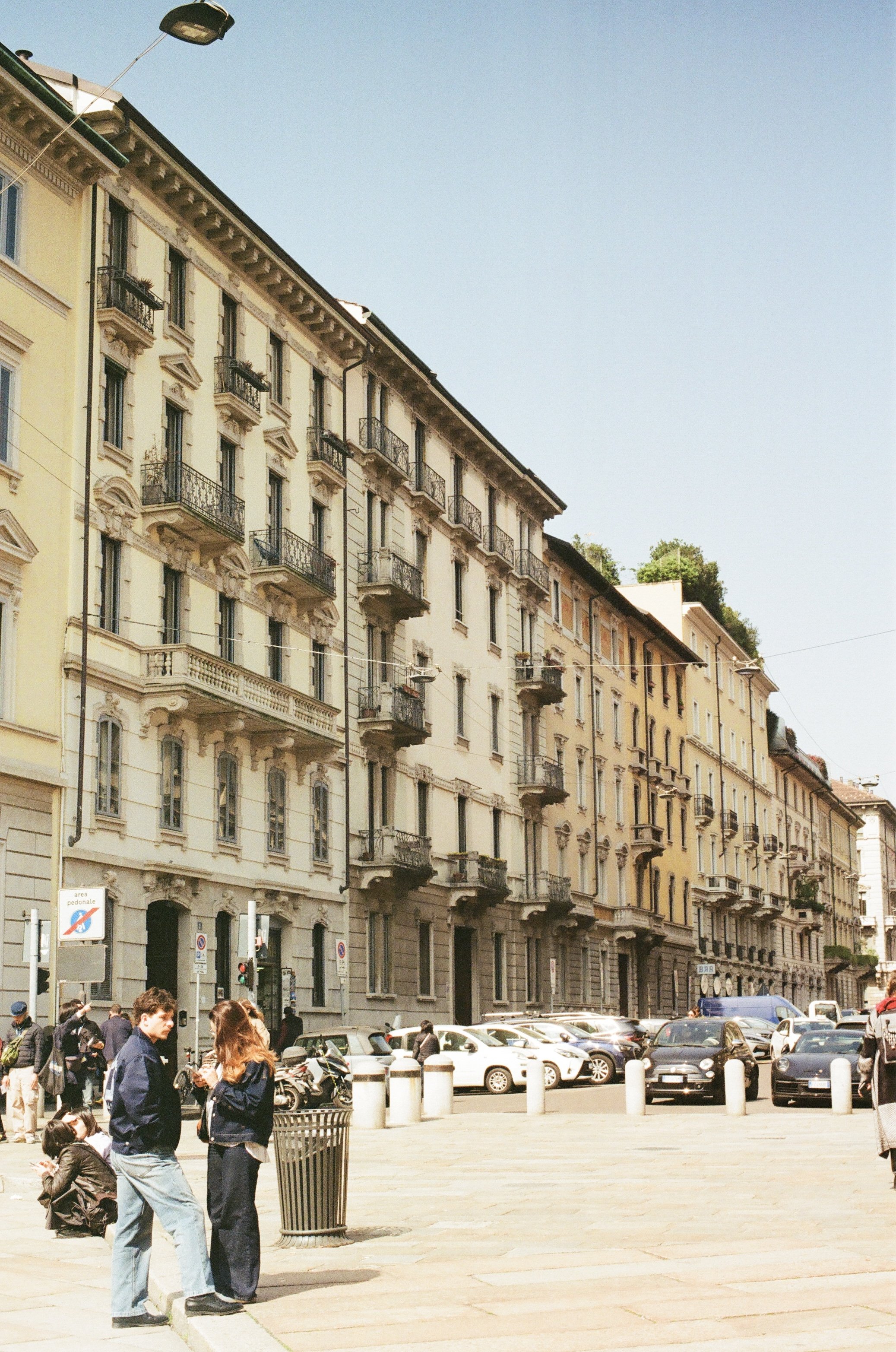
35 mm, Milan, outside of the Cenacolo Vinciano
When it comes to navigating Salone, it’s hard not to get overwhelmed, and to that I say: embrace it. Walk 20 kilometers in a day. See as much as your heart desires. My only advice is to follow what truly inspires you, and maybe don’t wait in line for 2+ hours unless your patience threshold is better than mine.
Most of my time was spent at Fuorisalone, a term that refers to the events and exhibitions happening outside the formal conference at the Fiera Milano complex. Some of the standout events in the city center this year included: Gucci’s Bamboo Encounters, Loewe’s Teapots, and Hermès’ Quest for the Object, to name a few.
Below, I’ll share some of the highlights from the exhibitions I visited, accompanied by images I captured on my film camera (an heirloom from my grandparents).
Cassina Staging Modernity
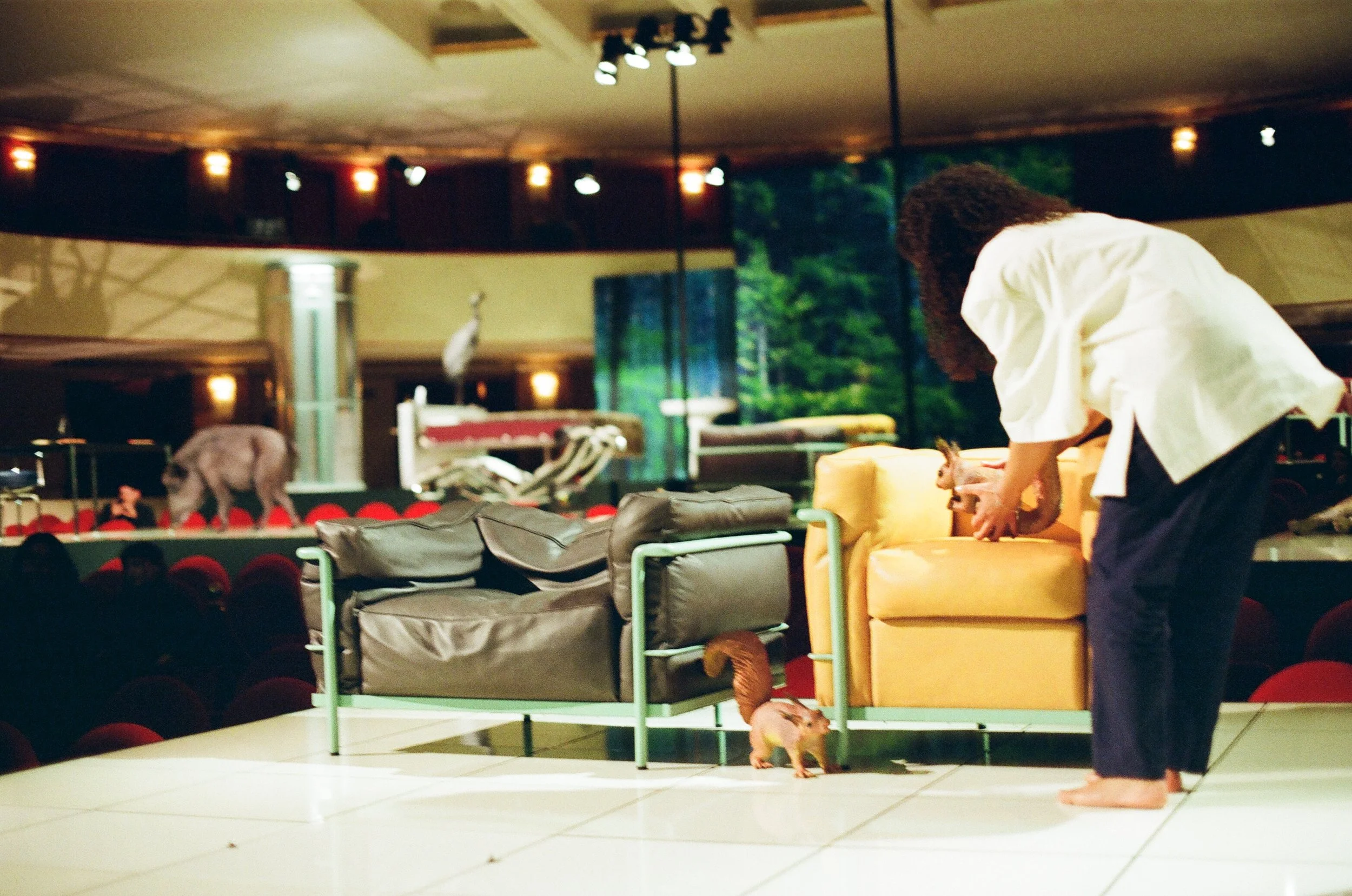
35mm, Milan, Teatro Lirico Giorgio Gaber
Very conveniently (and kindly) most events surrounding Salone are free, often accompanied by unexpected perks (a tote bag here, a drink there). Cassina, however, was the exception but we’ll allow it, since they staged a full performance with professional dancers.
To celebrate the 60th anniversary of their production of the works of Le Corbusier, Charlotte Perriand, and Pierre Jeanneret, Cassina debuted a vibrant new collection of these iconic pieces. Their exhibition, Staging Modernity, was presented as an artistic installation by Formafantasmaa Milan-based, research-driven design studio and took place in the historic Teatro Lirico Giorgio Gaber.
This installation was a tribute to Cassina’s avant-garde legacy, enriched by a theatrical performance directed by Fabio Cherstich. The entire experience blurred the lines between a product launch and a cultural happening.
At the heart of the exhibition was a quiet tension: a conversation (if not a confrontation) between modernity and nature. Formafantasma staged this dialogue in both literal and poetic terms. The clean, architectural forms of the furniture were set in contrast with bright, living color; the choreography of moving bodies; and elements that evoked the organic.
It spoke to both the enduring influence of nature and the timeless design philosophy of Le Corbusier, Perriand, and Jeanneret—each still resonating decades later.
To quote Cassina themselves:
“While the mid-20th Century celebrated a clean break from tradition, today we find ourselves grappling with the unintended consequences of that break, where the lines between the human-made and the natural are increasingly difficult to navigate. Through this intervention, Formafantasma proposes a new lens through which to see modernism—not as a fixed, static ideology but as a continually evolving conversation with the present.”
What brilliance to approach the idea of “break[ing] from tradition” and examine the reverberations of that rupture, still relevant today. How do we now re-integrate the human into how we build and design our future? How can we honor traditional forms and processes while infusing them with contemporary values, to create something both rooted and forward-facing?
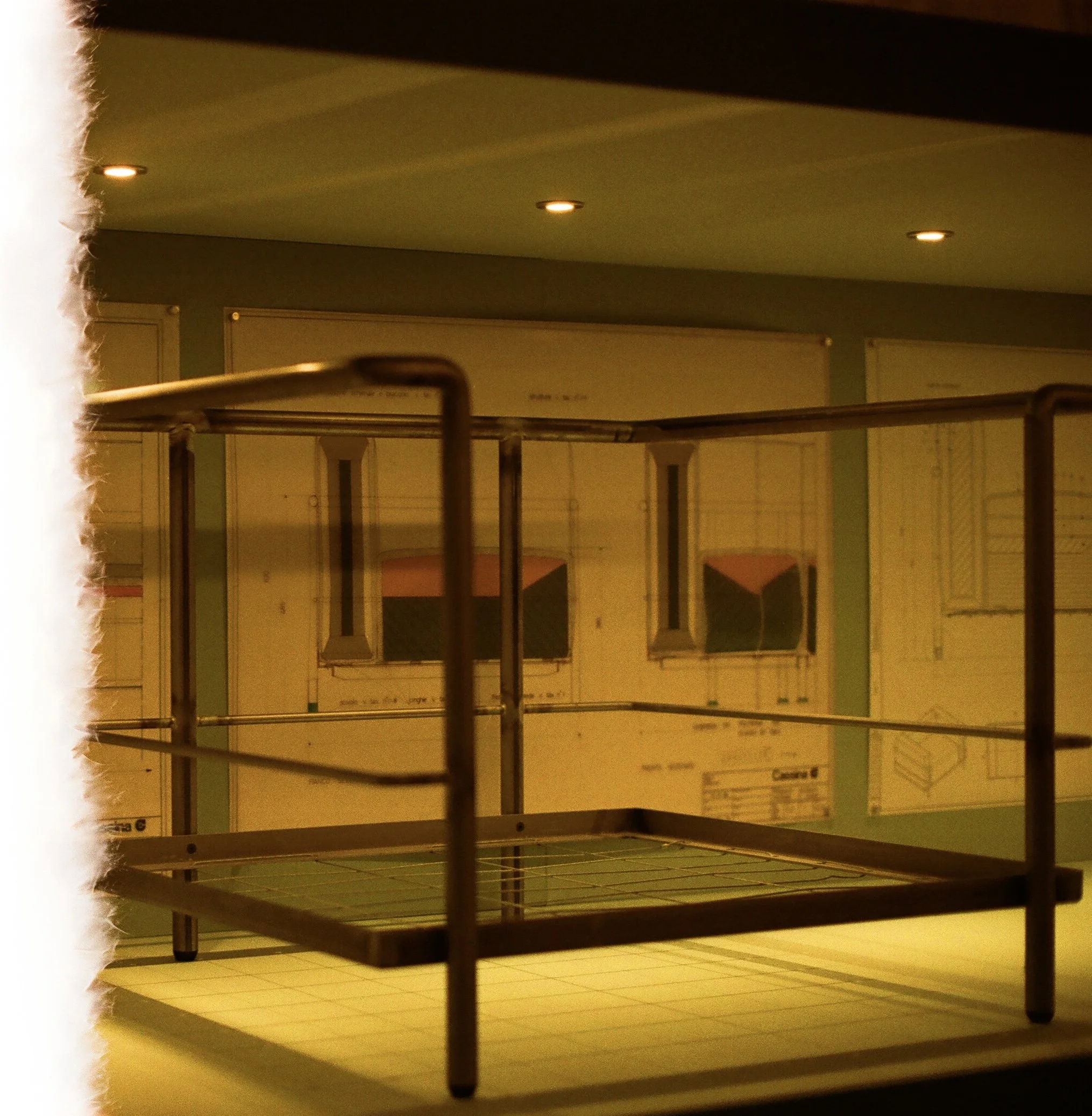
35mm, Milan, the 2 Fauteuil Grand Comfort petit modèle frame and drawings
Cassina clearly has a strong grip on the current climate that is grappling with these questions, presenting to us a successful possibility of what a viewpoint could look like for this future. This being one of the first exhibitions I viewed at Design Week, I saw this topic in my own work and certainly in the work of almost every designer or big brand present.
Gohar World
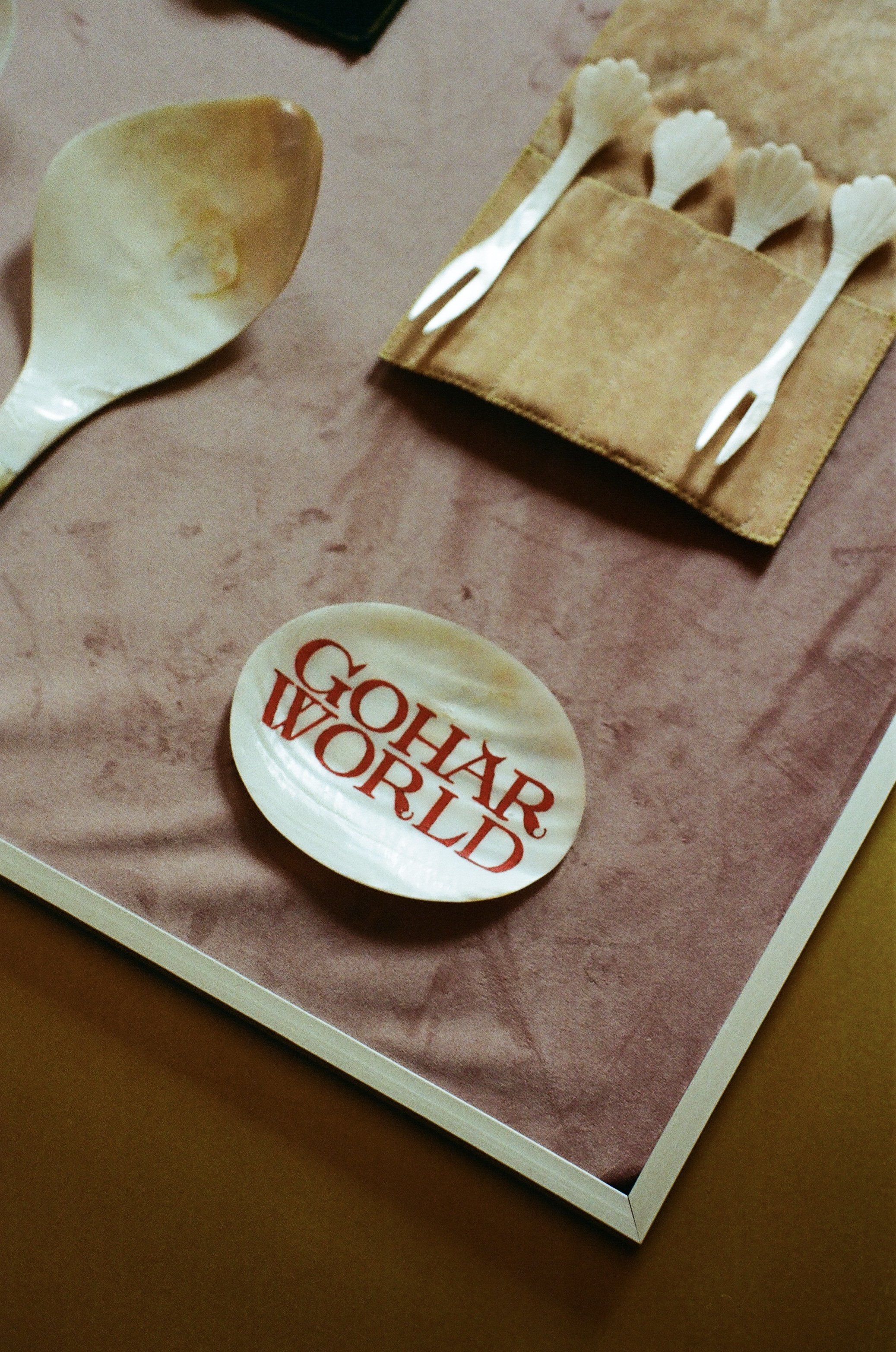
35mm, Milan, home & office of Michela Pelizzari in Loreto
My most anticipated appointment was at Gohar World in the Loreto neighborhood exhibiting inside the home and office of Michela Pelizzari, with interiors designed by Pierre Marie. This was the brand’s second appearance at Salone del Mobile, and I’m certain it’s only the beginning.
If you can find exhibitions staged inside apartments or villas, I highly urge you to prioritize them. The architecture and design of the home presenting the work becomes a key part of the experience (potentially equally as compelling as the exhibition itself).
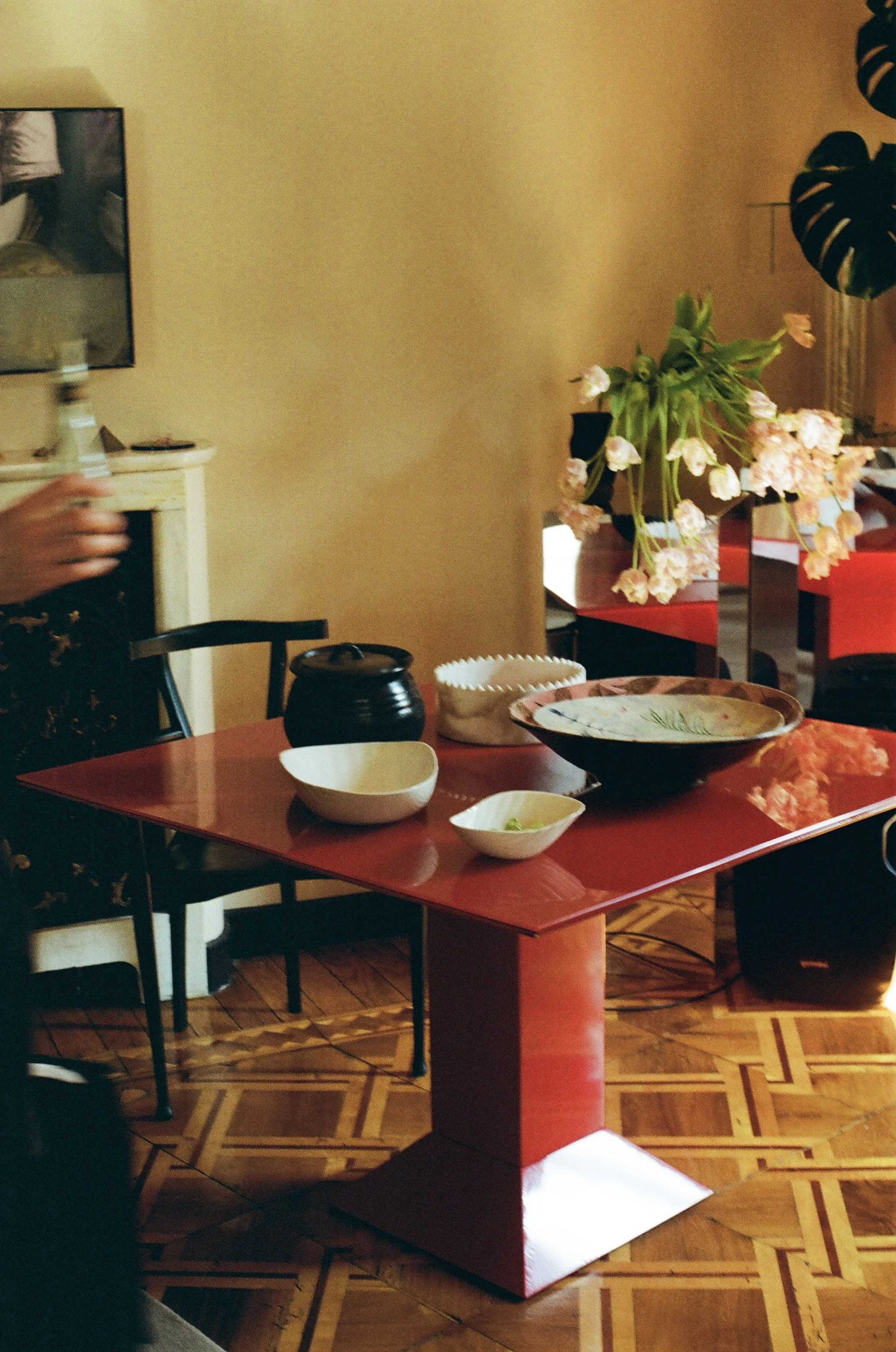
35mm, Milan, home & office of Michela Pelizzari in Loreto
Gohar World is a company founded by two sisters, Laila and Nadia. Born in Cairo and now based in New York, they run their studio together. Laila is a food artist who brings the brand’s entire aesthetic to life, demonstrating all the unexpected and delightful ways to use their mother-of-pearl spoon sets, silver cloches, swan tureens, and even butter curlers. She creates dishes like fish-shaped cakes, chocolate turkeys the length of a third grader, towering seafood displays, and more.
Inside the beautiful apartment hosting Gohar’s exhibition, food naturally played a central role in tying everything together — a ten-foot-tall haricot vert pole, salumi still in its casing strung along the walls, white eggs meticulously displayed, candies in Lobmeyr glass, and single-serve bottles of Campari with paper straws.
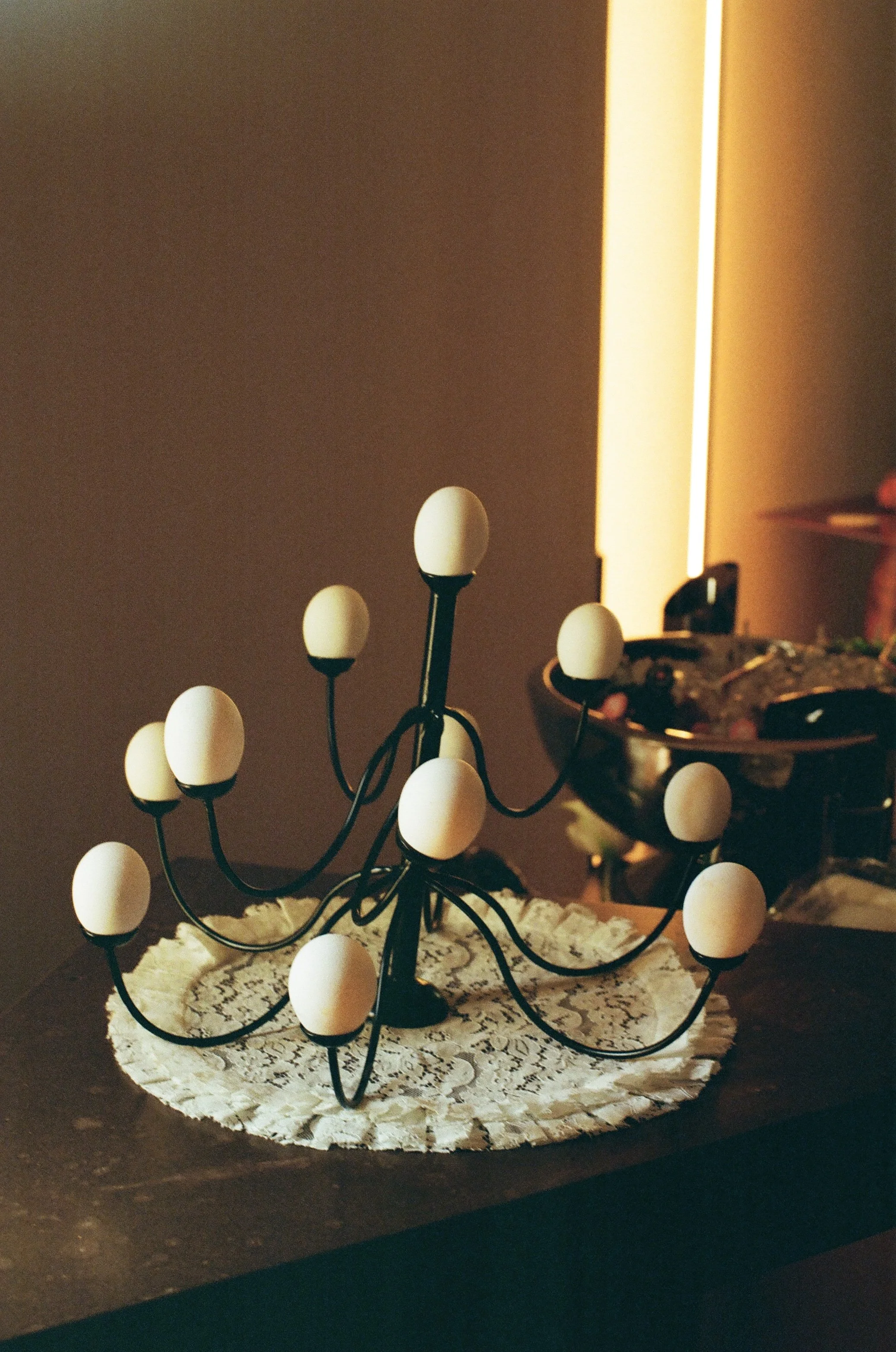
35mm, Milan, home & office of Michela Pelizzari in Loreto
Please, someone hire this brand to do set design for a film. Their world-building abilities are genuinely unmatched.
Anyone who knows me knows how much I admire Gohar World. I find their near-surrealist approach to design both refreshing and rare. There’s a distinctly feminine edge that runs through everything they do; from the culinary elements to the pearl accents adorning nearly every object, to the thoughtful construction of each tablescape. It couldn’t be done without that feminine intuition. Their work challenges me to rethink the domestic space, and it’s absolutely shaping what that future could look like.
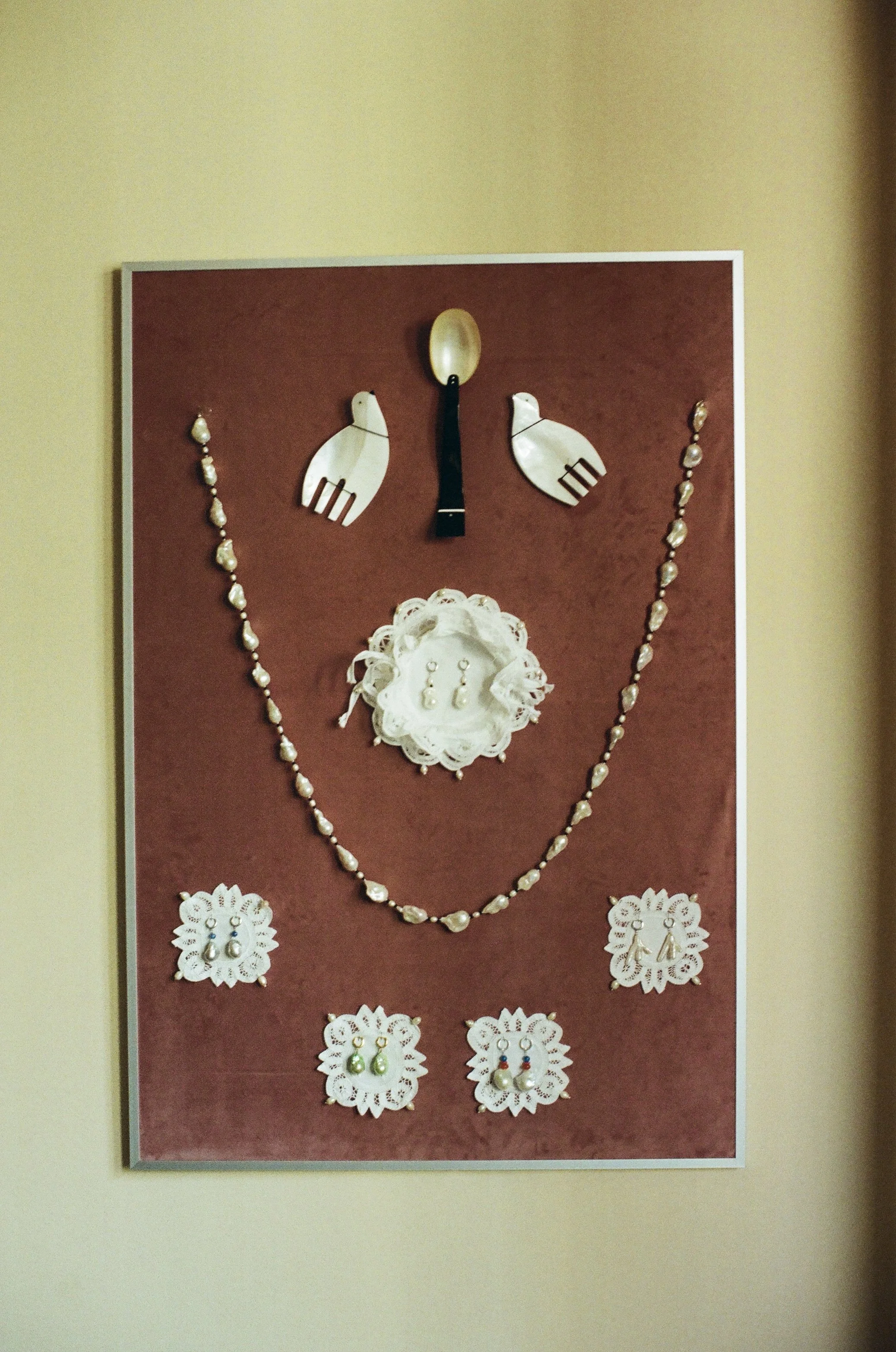
35mm, Milan, home & office of Michela Pelizzari in Loreto
